
Tap a floor tile with a coin and hear a dull, hollow sound? Notice a tile that has lifted, cracked or "tented" upwards? These are signs that the tile has lost its bond with the floor beneath it. Left alone, a small hollow patch can spread and eventually crack or pop out, which can be a tripping hazard.
Below we explain why this happens, what to look out for, and how our team repaired a damaged living room floor at Serangoon Avenue 3.
Common causes of hollow and popped tiles
- Poor adhesive coverage: when tiles are laid with "spot" adhesive instead of full coverage, air pockets are left underneath and the tile can debond over time.
- Weak or uneven base: a screed that is crumbly, uneven or not properly bonded to the slab cannot hold the tiles firmly.
- Temperature and humidity changes: tiles and the slab expand and contract at different rates. Without proper movement allowance, pressure builds up and tiles can lift.
- Age of the floor: older floors simply wear out, and the bond weakens after many years.
Warning signs to watch for
- A hollow or drum-like sound when you tap the tile
- Hairline cracks running across one or more tiles
- Tiles that rock slightly underfoot, or grout lines that crumble
- Tiles that rise up in a ridge, often in the middle of a room
⚠️ Don't wait too long
A small area of hollow tiles is usually easier to fix than a floor where many tiles have already cracked or lifted. If you notice the signs above, have the floor checked early.
Project: living room floor at Serangoon Avenue 3
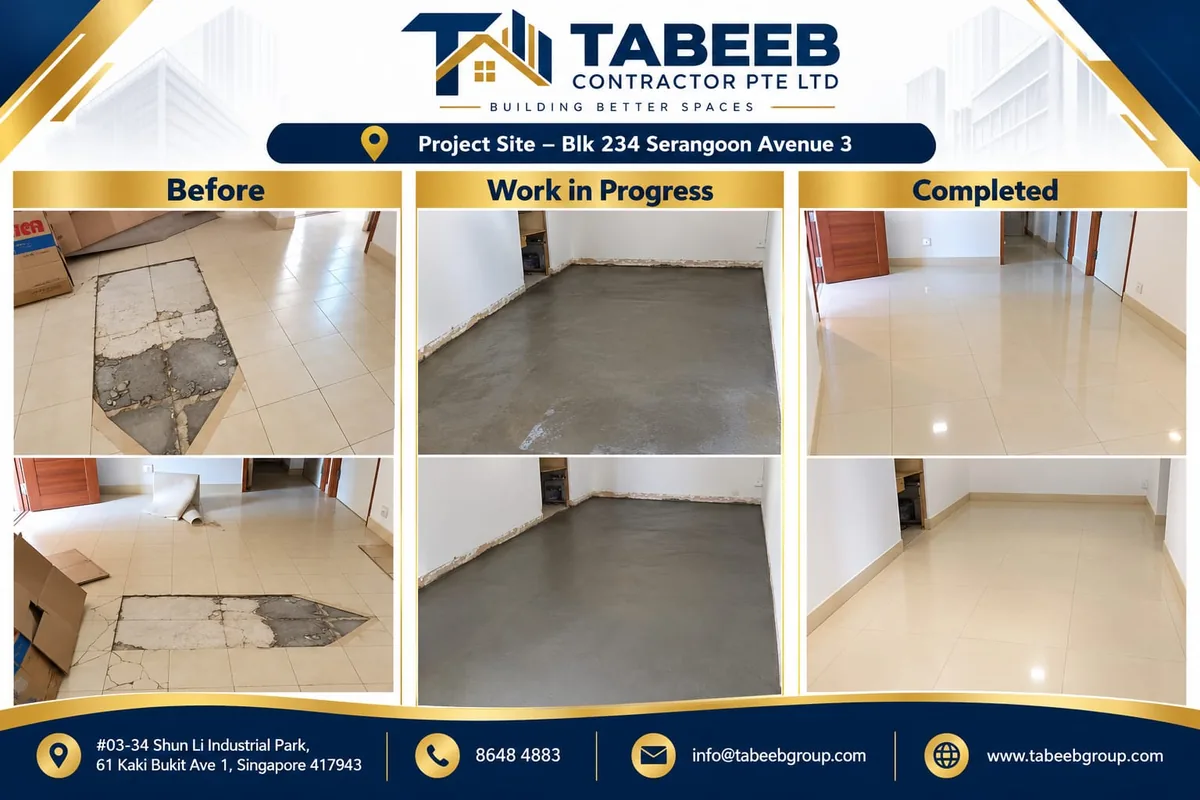
At this project, a section of the living room floor tiles had cracked and broken away, exposing the old base underneath. Patching individual tiles would not give a reliable or matching result, so the floor was prepared properly and re-tiled.
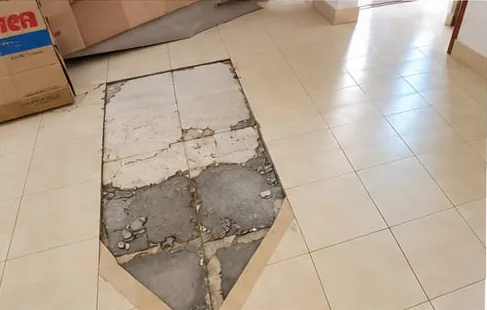
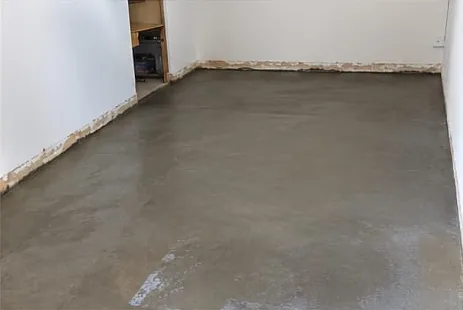
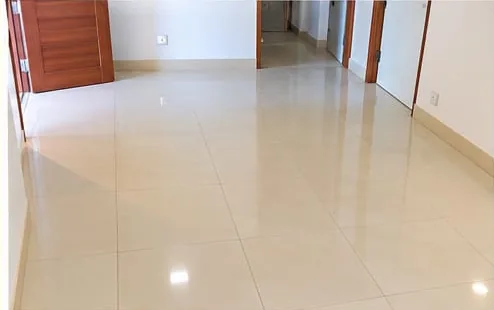
Before, work in progress and completed: Serangoon Avenue 3.
How we repaired it
- Inspection: we checked how far the damage extended by tapping the surrounding tiles.
- Removal: the damaged and hollow tiles were removed together with the weak base underneath.
- New screed base: a fresh cement screed was laid and levelled across the room so the new tiles have a firm, flat surface to bond to.
- Tile installation: new tiles were laid with proper adhesive coverage and consistent joints.
- Grouting and finishing: joints were grouted, skirting was completed and the floor was cleaned for handover.
Repair a few tiles or re-tile the floor?
If only a few tiles are affected and you still have matching spare tiles, a local repair can work well. If the hollow area is large, the same tiles are no longer available, or the base itself is weak, re-tiling the area or the whole room usually gives a longer-lasting result. We will explain the options after inspecting your floor.
Get your floor checked
Send us photos of the affected tiles on WhatsApp for a quick first assessment, or request a free on-site inspection. We provide a clear itemised quotation before any work starts. Learn more about our tiling and floor tiling services.